
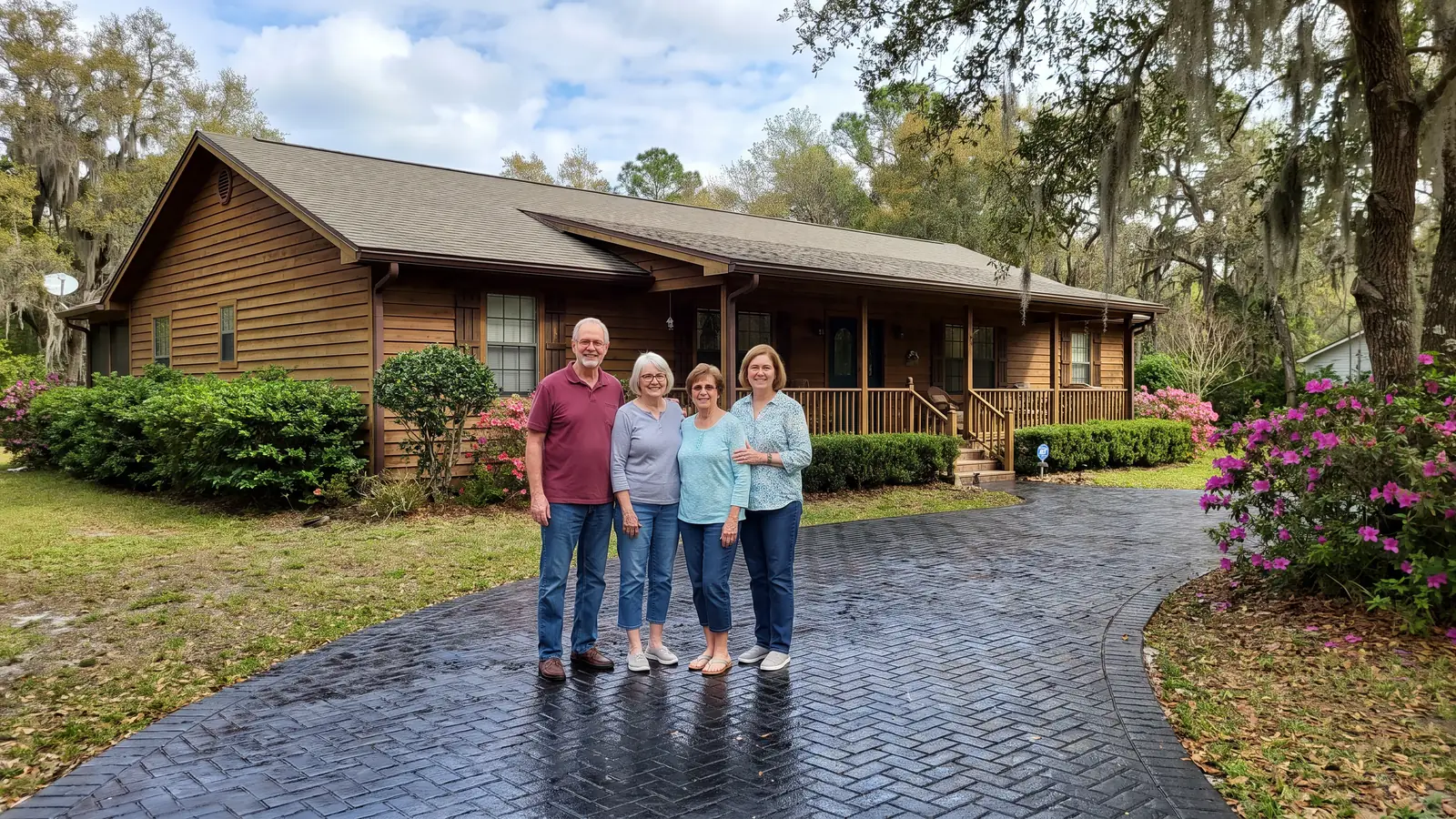
Paver sealing for San Jose homes
Paver Sealing in San Jose, FL
From the hotel that became Bolles School to Epping Forest, San Jose pavers get a free estimate; call (904) 299-8891.
- Brings out deeper paver color
- Fresh joint sand helps lock pavers in place
- Gives weeds less room to grow
- Makes the surface easier to keep clean
- Free estimate, no obligation
Request a Free Estimate
Free, no obligation.
Fast, careful paver sealing in San Jose
Paver sealing is available across San Jose, from the oak-lined streets near San Jose Boulevard to the blocks that run toward San Clerc Road and University Boulevard. A local contractor will clean, re-sand and seal courtyards, front walks, driveways and pool decks, with no charge for the first look. Reach a contractor at (904) 299-8891, and a reply arrives inside 1 business day, usually much sooner.
Maybe the courtyard by your front door has gone dull and gray, with joint sand washed down to bare dirt. A good wash, new sand and a fresh coat bring the color back, and the front walk looks cared for again. To book a look at no charge, ask for a free estimate.
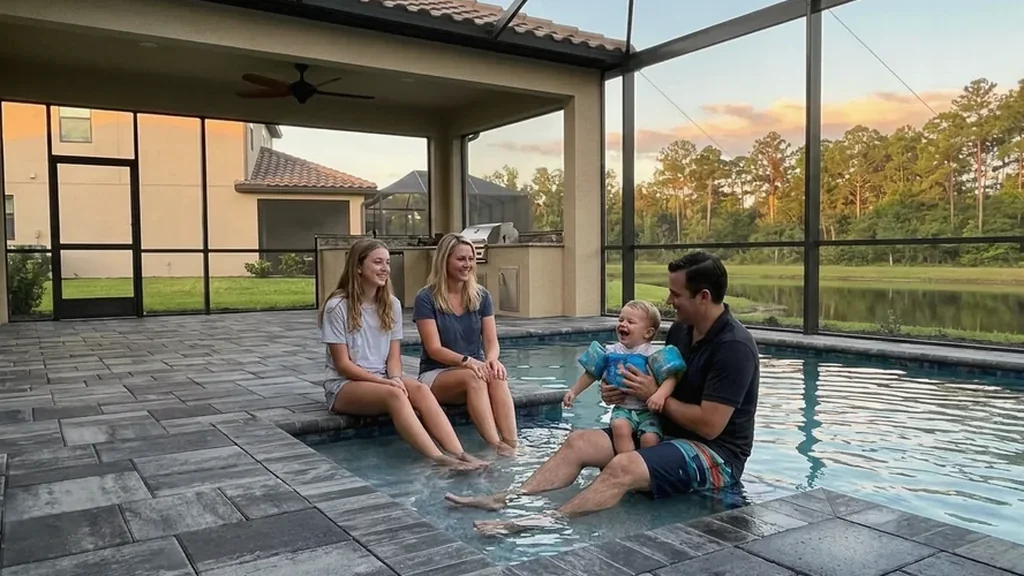
Why hire a local paver sealing contractor in San Jose?
San Jose homeowners choose a local paver contractor because one street here can hold a 1920s Spanish Revival house, a ranch built after the war and a newer gated home. To see how that applies to your address, ask for a free estimate.
A look at no charge
The contractor visits your San Jose property, checks the pavers and quotes a price. Hearing the number is free.
Wall-friendly washing
Ask how rinse water will be kept off stucco and old masonry before the wash begins. A clear answer is a good sign.
A finish that suits the house
A natural finish suits a Spanish Revival house, and gloss shows scuffs sooner. Pick what fits your street.
Your decision
Nothing binds you after the estimate. The finish, the date and the choice to proceed all stay with you.
Get Your Free Estimate in San Jose
Tell us about your pavers in San Jose.
Free, no obligation
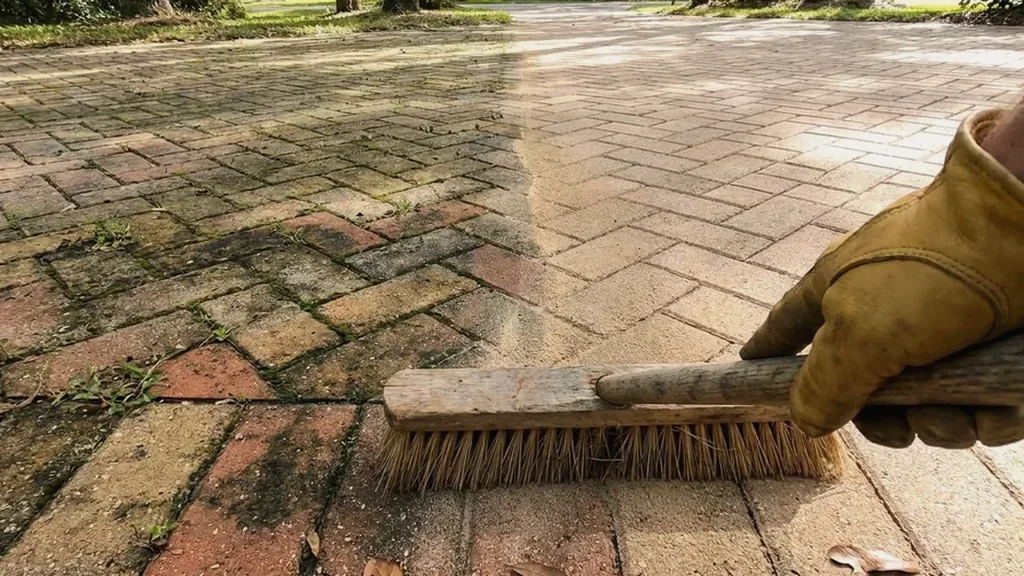
What paver problems show up most in San Jose?
Stucco, tile and old masonry beside the pavers
San Jose's early buildings were Mediterranean Revival, many designed by the firm Marsh and Saxelbye, and the planner John Nolen meant the neighborhood to be a bit of Old Spain. Where pavers meet old stucco or masonry, cleaners and rinse water need care. Harsh runoff can streak a wall that has stood for a century. The contractor should plan the wash around the house, and not only the surface being sealed. If your courtyard has a stucco wall on one or two sides, mention it at the estimate and ask how the wall will be protected during the wash.
Pavers from several eras on one street
After World War II, land that had gone unsold was re-platted, and ranch and midcentury modern homes went up beside the 1920s survivors. A walk laid in one decade and a drive laid in another can have different bases and different coats. Weak or poorly compacted bases top one paver maker's list of sinking causes, so a dip near the garage is worth pointing out. Sunken or lifted sections get repaired first, since sealing preserves them as they are. San Jose was drawn with a radial street pattern around the old hotel, so the streets curve, and a curving drive has more edge to keep tight.
Tidal river air
San Jose sits along the river's east bank, and the river surges with tides far inland. Humid air off the river slows drying, and the coat only goes on dry paving. A wet look on damp pavers can come out cloudy. Lots close to the water may need more waiting time between the wash and the coat. That wait protects the finish, and it beats a cloudy coat that has to be stripped and redone.
Shade that keeps moisture in
UF/IFAS puts a live oak at 60 to 80 feet tall, with a crown that can spread 120 feet, and says it never sheds all its leaves at once. A courtyard under a crown like that stays damp, which is where algae settles, as it does under any tree or patio roof. The golf course fills a triangle at San Jose Boulevard and Via de la Reina, so mature trees and watered turf sit close to many streets. Washing clears the film before any sealing. If the green returns in the same corner every year, tell the contractor where it starts.
A coat nobody can name
By 1928 only 31 homes had been built, so most of San Jose's houses came later, over many decades and through many owners. The last product put on the pavers may have been forgotten years ago, since owners have changed many times since the first lots sold in 1925. Water-based and solvent-based products do not mix, so the old coat can limit your product choices from the start. Any record of the last coat saves guessing.
Where does San Jose begin and end for a paver sealing estimate?
A contractor can quote pavers anywhere from University Boulevard on the north to San Clerc Road on the south. The neighborhood sits along the east bank of the St. Johns River, 4.5 miles south of Downtown, with the railroad tracks west of US 1 on its eastern side. Streets were named for cities in Spain, and the golf course fills the triangle where San Jose Boulevard meets Via de la Reina. Give your street when you ask for a free estimate.
Epping Forest is the gated community built on the 58-acre estate the du Pont family put up in 1927. It holds about ninety homes and 80 condominiums, and the last home went up in 1999. Under Florida Statute 720.3035, an association may review changes only to the extent its declaration or published guidelines state or reasonably infer. Read your documents, then call (904) 299-8891.
Not every San Jose home is old. After the war, Stockton, Whatley and Davin re-platted much of the unsold land, and midcentury modern and ranch homes filled in beside the Mediterranean Revival survivors. That means pavers on neighboring lots can be decades apart in age. Say what decade your house dates from when you ask for a free estimate.
What does paver sealing cost in San Jose?
Regional companies commonly publish a band of $1.75 to $3.25 a square foot for the full wash, sand and seal, and San Jose pricing tends to follow it. A coat that has failed has to be stripped before resealing, and that step has its own price. A small courtyard may hit a company minimum. To get a figure for your pavers, ask for a free estimate.
Area, green film, missing sand and the existing coat set a San Jose quote. Pavers beside stucco may take longer because of the extra care at the walls. Repairs to sunken sections add a separate cost. Call (904) 299-8891, and the contractor can say which of these show up on your property.
| Paved area | Typical example | Clean, sand and seal |
|---|---|---|
| 300 sq ft | Small patio or walkway | $525 to $975 |
| 600 sq ft | Two car driveway | $1,050 to $1,950 |
| 1,000 sq ft | Large driveway or pool deck | $1,750 to $3,250 |
| 1,500 sq ft | Driveway plus pool deck | $2,625 to $4,875 |
Math based on the $1.75 to $3.25 per square foot that Northeast Florida paver companies publish. Your contractor sets the actual price after seeing the surface. Repairs, leveling and stripping failed sealer are usually extra.
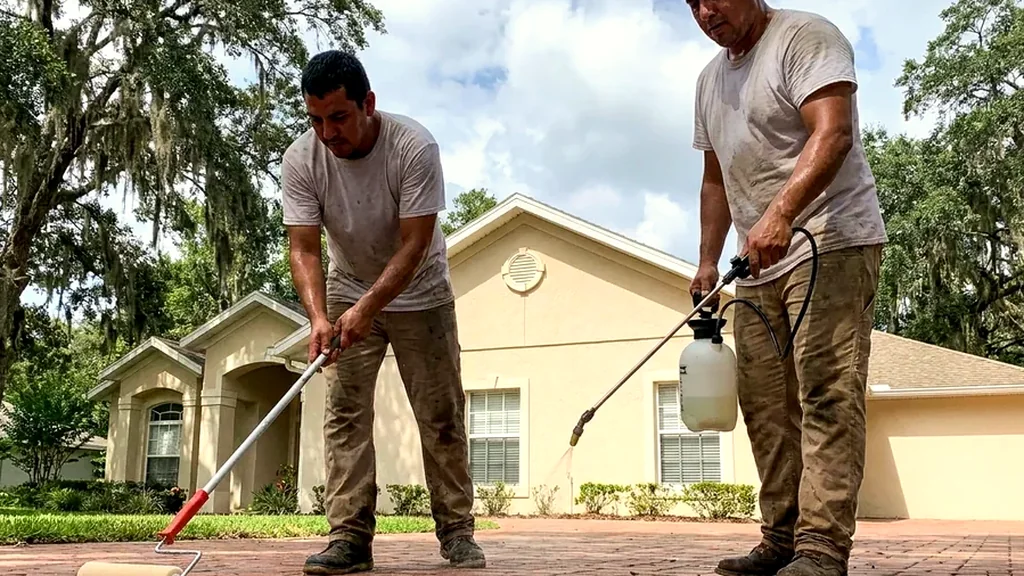
How does a paver sealing job work in San Jose?
Read the house before the pavers
The contractor starts by looking at what the pavers sit beside. Stucco, tile or old masonry set the rinse plan. Dips, lifted edges and a weak base are noted, because sealing preserves whatever shape it covers. Then comes the old-coat question, since a water-based product will not bond over a solvent-based one.
Wash in sections
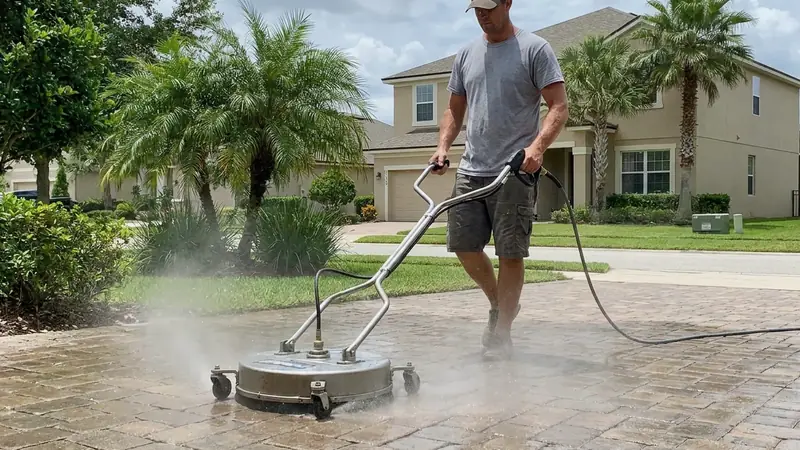
Cleaning clears leaf stain, green film and dirt. Under a big oak the film is thick, since algae grows where shade keeps moisture. Rinse water is aimed away from walls and plants, since Mediterranean Revival walls are often stucco or masonry. Sprinkler rust lines get their own treatment at this stage, because UF/IFAS says iron in irrigation water leaves orange stains.
Fill every joint
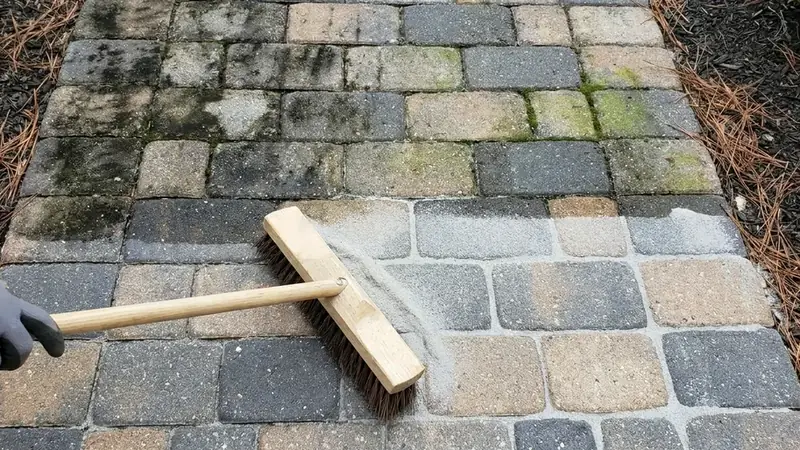
Fresh sand goes in once the surface is clean. Without it, rain and foot traffic take sand out within a few seasons, according to a Jacksonville company. San Jose's ground in Duval County is sand more than 80 inches deep, so a topped-up joint matters more than usual. Settled soil is no help to a loose joint. The face is swept clear afterward.
Wait for the river air
Humid air off the river slows the dry-out. Sealer waits for a surface that is dry through, and the contractor checks shaded corners and low spots as well as the middle. On damp stones a wet look can cloud over, which is why patience protects the finish here. When storms are forecast, the coat slides to a drier day.
Coat, cure, reopen
Most contractors spray first and back-roll second, for even coverage and full joints. Feet can usually go back on within a few hours, while cars need longer. Ask for the day your drive reopens. Sprinklers stay off the new coat until the contractor says it has set, and pets and children stay off with them.
Complete paver services in San Jose
A San Jose job has four parts: wash, sand, dry, coat. Near stucco or tile the wash goes slowly because rinse water is steered with care. Every part is finished before the next one starts. For a plan matched to your property, call (904) 299-8891.
Courtyards, front walks, driveways and pool decks all turn up here. A courtyard under a big oak stays damp and collects leaf stain, while a driveway takes tire wear. Each deserves its own approach. List every surface when you ask for a free estimate.
Pick the product only after the old coat is known, because water-based and solvent-based products cannot be stacked. A natural look sits quietly on a Spanish Revival front. A wet look adds shine and shows scuffs sooner. Call (904) 299-8891 to compare finishes.
Plan around the weather. Brief, heavy downpours fill May to September, and sealer needs a dry surface, so shaded courtyards set the pace. November through April is the driest stretch. For a window that fits your week, ask for a free estimate.
Questions to ask before you hire
- How long do the pavers need to dry after washing before the sealer goes on?
- Do I need to turn off my sprinklers, and for how long?
- Will you call before arriving, and what window should I plan for?
- If part of my patio was sealed years ago, can the new coat match its sheen?
- Can you clear the white, chalky haze that shows up on some of my pavers?
- Will the pressure washing wear down the surface of my pavers?
- How do I keep my dog off the driveway while the sealer cures?
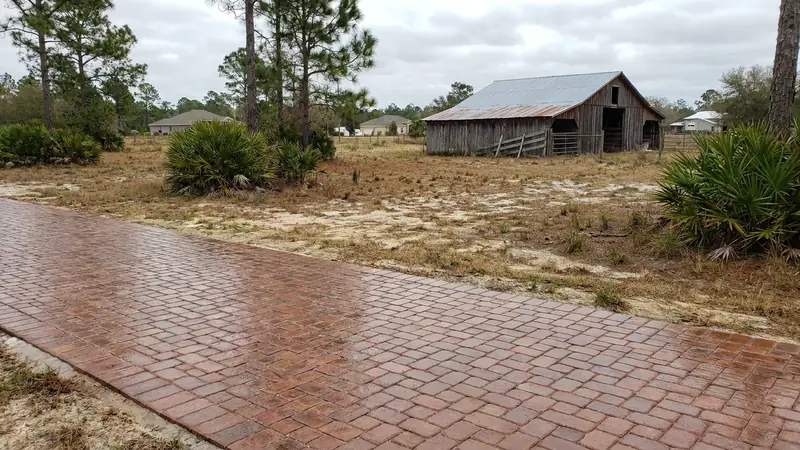
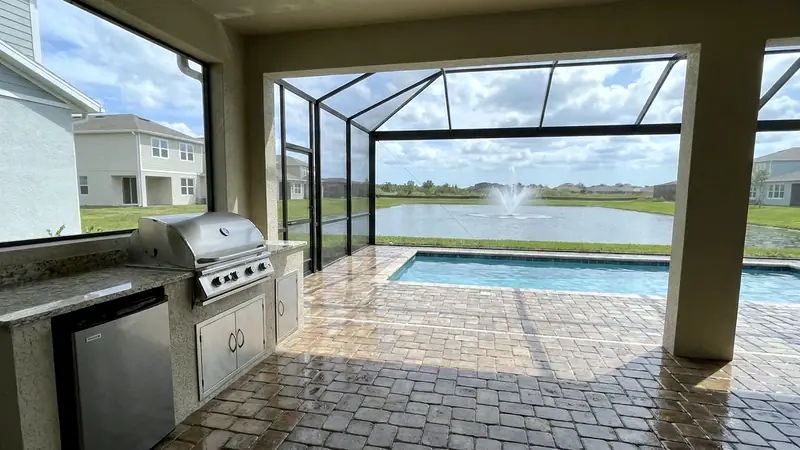
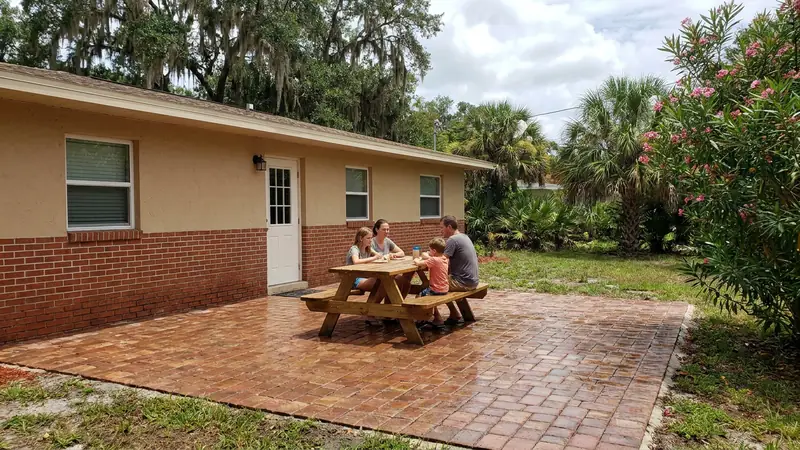
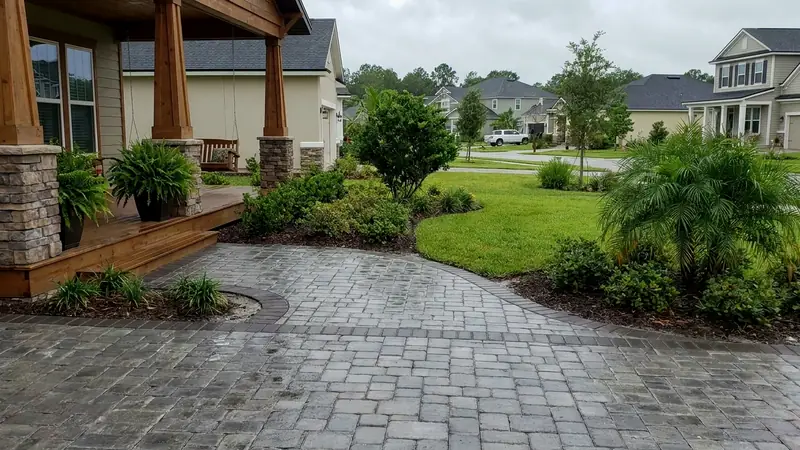
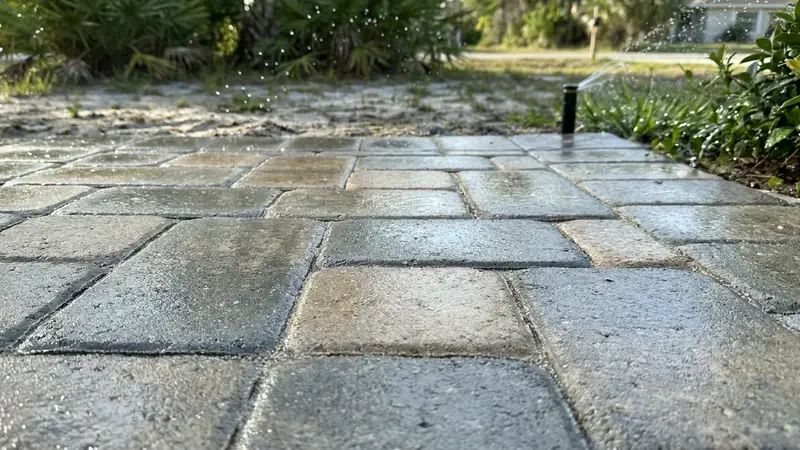
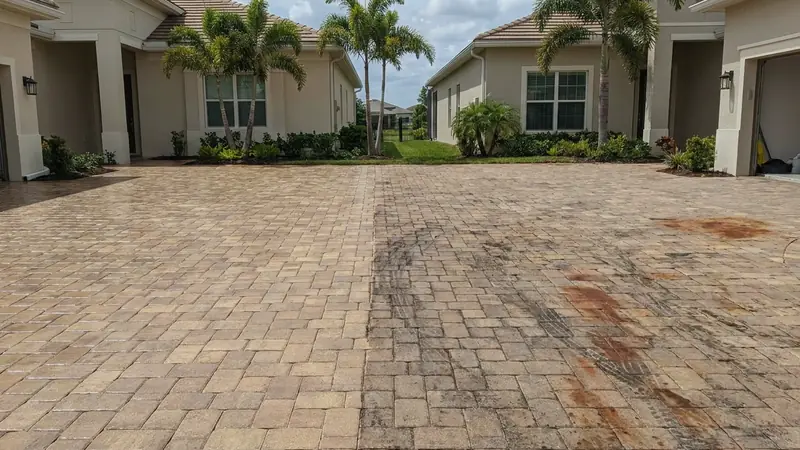
What do sealed pavers look like around San Jose?
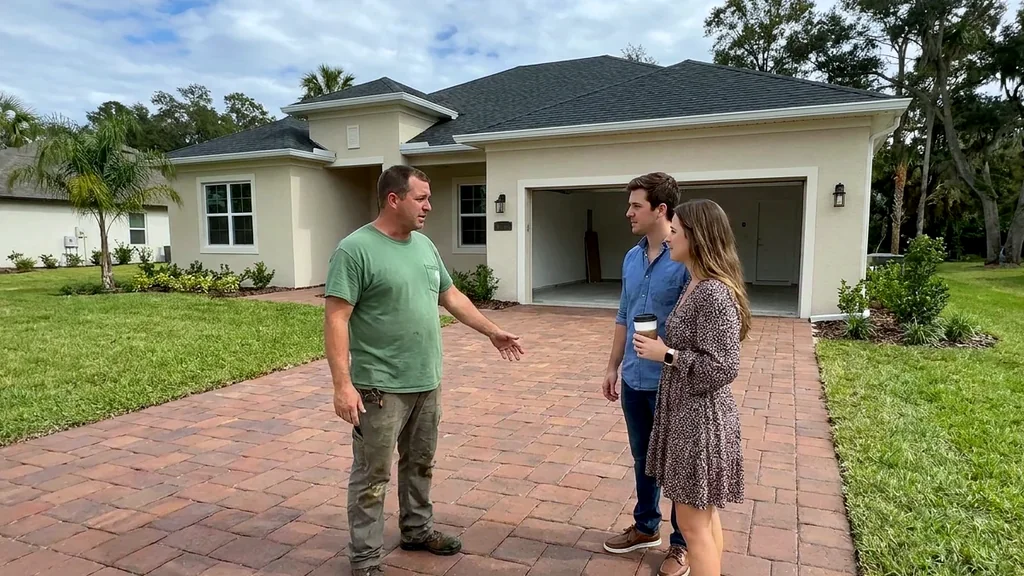
Why local matters in San Jose
A contractor who knows San Jose knows its mix of houses. A 1920s Spanish Revival home, a midcentury ranch and a gated newer home can sit within a short drive. Each has its own paver age and its own care needs. To start with yours, ask for a free estimate.
River air is the second thing. The St. Johns runs along San Jose's western edge and surges with tides, which keeps the air damp. A local contractor allows extra dry time before the coat. Call (904) 299-8891 to ask how that affects your date.
The canopy comes third. Live oaks here can spread 60 to 120 feet, so a single tree can shade a whole courtyard. A pro used to that much shade expects green film and leaf stain. To talk through your shade, ask for a free estimate.
What is the story behind San Jose's streets and buildings?
San Jose began as a plan for a self-contained community, laid out by the planner John Nolen after investors bought 1,000 acres of the old San Jose Plantation in 1925. The layout was radial, with streets named for Spanish cities and paved sidewalks on every street, which was unusual then. The first phase sold out in August 1925, and the San Jose Hotel opened in 1926. Near any of these streets, ask for a free estimate.
The hotel later became the Bolles School in 1933, and the du Ponts built the Epping Forest mansion in 1927 on land first planned for a second hotel. The San Jose Country Club's golf course fills a triangle at San Jose Boulevard and Via de la Reina, where the plan placed it. By 1928 only 31 homes had been built, so most of the neighborhood came later. Call (904) 299-8891 and name your street.
Frequently Asked Questions
Per square foot, what does paver sealing run in San Jose?
Count on $1.75 to $3.25 per square foot in San Jose for cleaning, sanding and sealing, the band companies in this part of the state commonly publish. What moves a quote inside that band is shade growth, missing sand and the coat already down. A failed coat adds a stripping step. Always ask for the area in square feet, and ask that area and rate sit on one line of the quote so the math is easy to check.
Is sealing pavers a good call for a San Jose home?
In most cases, yes, for concrete pavers. A Jacksonville paver company credits Florida sealing with a big cut in UV fade, joint washout and mildew. Damp river air and shade give mildew an easy start on San Jose pavers. Plan on redoing the coat when it wears. Left unsealed, pavers here soak up moisture and lose sand from their joints within a few seasons, that company adds.
How long do paver sealers last in San Jose?
Expect somewhere between two and five years before the next coat, the span companies commonly quote. Shade, sun and daily tires shift it, so a covered courtyard and an open driveway rarely need a new coat in the same year. Check the sunny spot first. A Jacksonville company also notes that drive surfaces wear faster than patios, so expect the driveway to ask for its coat before the courtyard does.
Is it better to spray or roll paver sealer on San Jose pavers?
Pros commonly do both in one visit, per a Jacksonville company: spray for even coverage, then back-roll to work sealer into the joints and avoid puddling. Rolling alone risks lap marks. Ask to see the first section after it dries.
Can pavers beside old stucco and masonry be sealed safely?
Yes, with care. The wash is the risky part, so cleaner and rinse water are kept off the wall. Ask how the walls will be protected and where the water will run. San Jose's Mediterranean Revival buildings date to the 1920s, many by the firm Marsh and Saxelbye, so the stucco beside your pavers may be a century old. If the wall already shows streaks, say so, so the contractor can tell old damage from new. A natural finish also tends to suit older masonry, and a Jacksonville company describes it as penetrating, not film-forming.
Does a gated San Jose community need approval to seal pavers?
Check your association documents. Epping Forest is a gated community of about ninety homes and 80 condominiums on the old du Pont estate, and other streets may have their own associations too. Florida Statute 720.3035 holds an association's review to what those documents state or reasonably infer. A natural finish stands a better chance of passing as upkeep than a high-gloss one, so ask before choosing. File any approval with your house records.
Should sunken pavers be repaired before sealing in San Jose?
Yes, repairs come first. Sealing locks in any sunken or lifted section as it is, a Jacksonville company explains, and one paver maker puts a weak or poorly compacted base near the top of its sinking causes. Older San Jose drives can have settling dips, especially near the garage apron or the street edge. Point them out at the estimate so they are priced. Ask neighbors on your street who sealed theirs and when, since one company may have done several drives and a name saves guessing.
Why does my San Jose courtyard turn green so fast?
Shade plus moisture is the usual cause. Green algae grows where shade keeps moisture on a surface, and Florida's humidity brings it back. A big oak overhead makes it worse, and the green usually starts where the sun reaches least. Lots nearer the river may stay damp longer than inland ones. Washing clears it before sealing.
Nearby areas we serve
Ready for a Free Estimate in San Jose?
Call (904) 299-8891 and tell us about your pavers.
Free, no obligation